
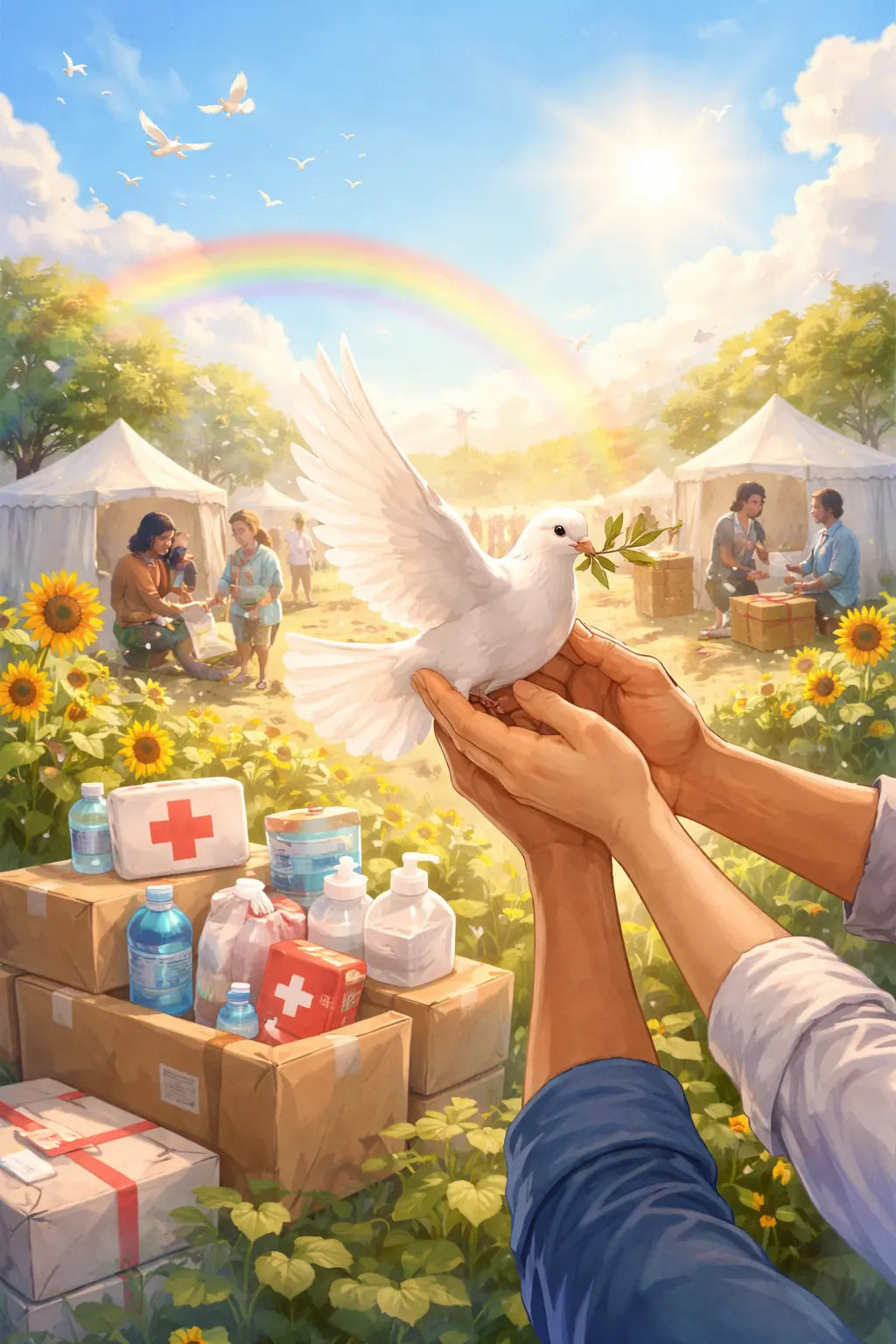
When I see in the news that ordinary people are being hurt in wars, I feel something I don't have a precise word for. Sadness, yes. But also a particular kind of helplessness that comes from being far away and having resources that can't reach the people who need them.
I know this feeling from a different crisis. Let me tell you what actually happened.
Paris, 2020
I was in Paris when the pandemic began. When the outbreak was severe in China, I helped my family and friends in Paris buy masks — at the time, they were nearly impossible to find in Europe. Many kind French people around me also gave masks generously, sharing what little they had.
Later, when the virus spread in France, I wanted to return the help. By then, China had sufficient supplies. We shipped protective materials from China to Paris and distributed masks to people around us — neighbors, acquaintances, strangers who needed them.
What I learned from that experience: the world is genuinely connected. People are willing to help each other. The barrier is almost never willingness. It's finding the channel — the way for someone who wants to help and someone who needs help to reach each other.
What I Can Actually Do
I'm a small business owner in China who exports goods. When I think about conflict zones, what I can offer is logistics knowledge and supply chain access — things that are genuinely available here and that could matter in a crisis. Disinfectants. Basic medical supplies. Things that seem mundane until they aren't.
The honest answer is that I don't always know how to help at the scale I want to. Transportation routes get cut. Bureaucracy blocks things. The gap between wanting to help and being able to help is real and sometimes humbling.
But I keep thinking about the masks in Paris. That worked because it was personal — I knew the people, I understood the need, I had access to the supply. The system that worked was small and human, not large and institutional.
What This Has to Do With What I Make
It sounds like a stretch to connect war aid with jewelry. But there's a thread.
One of the things I make — the engraving collection — was partly inspired by thinking about what happens when systems fail. When phones run out of battery. When documents get lost. When someone is separated from the people who know them.
A stainless steel pendant engraved with a name and contact information requires no power, no internet, no functioning institution. It works anywhere a person can read. For families in displacement, for elderly people with memory conditions, for anyone who might need a stranger's help finding their way back — physical, permanent information is a different kind of resource than digital information. More fragile in some ways. More durable in others.
Permanent Information — Wearable, Waterproof, Always There
The Belief Underneath
I believe most people, given a real channel and a manageable ask, want to help each other. The pandemic masks confirmed this for me. The French neighbors who shared what little they had. The supply chains that moved when people were motivated enough to move them.
I'm not able to solve the large problems. But I can make things that carry information across situations where information matters. I can send goods across borders when the channels exist. I can build a business that operates on the assumption that the world is connected and that connection has value.
That's a small contribution. But small contributions, multiplied by many people who believe the same thing, are what moved masks from China to Paris in 2020.
If you're looking for ways to help people affected by conflicts right now, organizations like the ICRC (International Committee of the Red Cross) and UNHCR have established channels and local presence. They know the logistics in ways I don't.
Ren — founder of Fairies Whisper. Based between China and Europe. Shipping things across borders since 2020.

Leave a comment
This site is protected by hCaptcha and the hCaptcha Privacy Policy and Terms of Service apply.